Renal Research
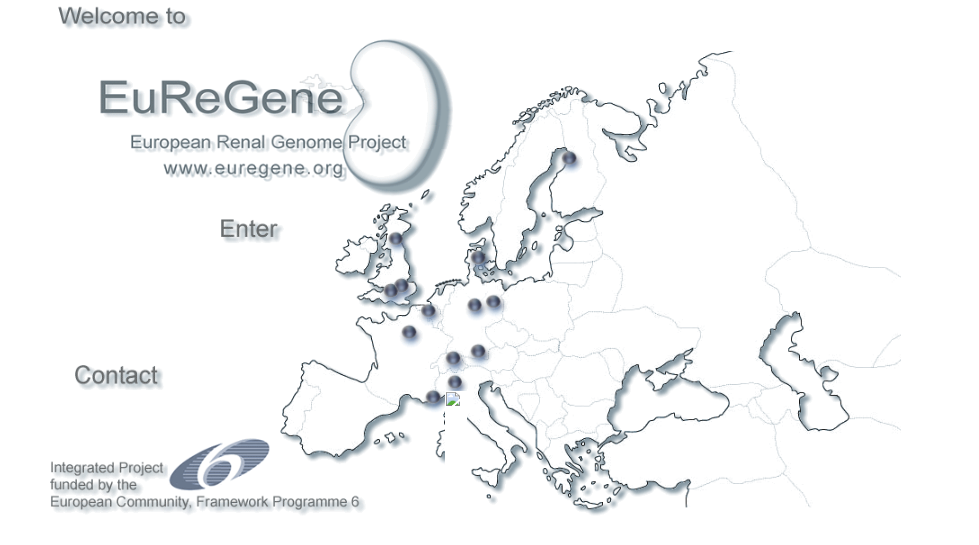
EuReGene (European Renal Genome Project) focuses on advancing research into kidney development, function, and disease through genomics and systems biology. It provides a comprehensive Kidney Atlas Data Portal, centralizing detailed gene expression data and developmental insights, specifically using mouse models. This resource integrates multi-omics data—such as transcriptomics and phenotypic profiling—to map gene expression patterns and their effects on kidney development and pathology.
Key Components of EuReGene
Kidney Atlas Data Portal
The Kidney Atlas is the centerpiece of EuReGene’s data-sharing initiative. It contains spatial gene expression maps of developing mouse kidneys, with annotations for various nephron structures and other kidney components. This allows researchers to explore the temporal and spatial expression of thousands of genes during key stages of kidney development. The portal features tools for visualizing gene expression in specific regions of the kidney, such as the nephron, glomerulus, and tubules, helping users to identify the molecular drivers of kidney morphogenesis.
Functional Genomics and Gene Discovery
EuReGene’s efforts extend into functional genomics, where genes critical to kidney development and function are identified. By leveraging mutant mouse models, researchers can explore the impact of gene knockouts on kidney development and disease phenotypes. This research aims to uncover genes that, when mutated or dysregulated, lead to congenital kidney diseases or other renal pathologies. These insights contribute to understanding human kidney diseases, such as nephrotic syndrome, chronic kidney disease, and cystic kidney diseases.
Multi-Omics Integration
EuReGene integrates data from various omics technologies—genomics, transcriptomics, proteomics, and epigenomics—to provide a multidimensional view of kidney biology. This systems biology approach allows researchers to examine how genetic variations affect not only gene expression but also protein production and cellular function. These data are vital for understanding the molecular networks that regulate kidney function and identifying potential therapeutic targets for renal diseases.
Mutant Phenotyping and Kidney Development Studies
One of EuReGene’s significant contributions is its extensive phenotyping of mutant mice. By disrupting specific genes and observing the resulting kidney phenotypes, researchers can better understand the roles these genes play in kidney formation and function. The project focuses heavily on genes involved in nephron patterning, branching morphogenesis, and renal filtration processes, helping to build a detailed genetic map of kidney development. Through high-resolution imaging and gene expression profiling, EuReGene provides unparalleled insights into kidney development at a cellular and molecular level.
Applications in Disease Research and Drug Discovery
EuReGene’s findings are crucial for understanding the genetic basis of kidney diseases. The project helps identify key genes and molecular pathways involved in renal pathologies, providing a foundation for the development of novel therapeutic strategies. In the context of drug discovery, the EuReGene data can be used to identify candidate drug targets by pinpointing genes or proteins that are essential for kidney function or involved in disease progression. This also facilitates preclinical testing using mouse models, ensuring that potential therapies target the right biological mechanisms.
Collaborative and Open Access Model
EuReGene promotes a collaborative research environment, providing open access to its data through the Kidney Atlas. This allows researchers worldwide to use the data for comparative studies, cross-species analyses, and hypothesis generation. The open-access model accelerates discovery by allowing scientists to build upon existing knowledge without redundancy. Additionally, EuReGene collaborates with other major renal research projects, integrating diverse data types into a unified platform that can inform a wide range of kidney biology and disease studies.
Advanced Research and Future Directions
The Computational Systems Biology component of EuReGene plays a critical role in the interpretation and integration of vast amounts of biological data. By using computational tools and machine learning algorithms, EuReGene is pioneering efforts in predictive modeling of kidney diseases. These models aim to predict how genetic variations impact kidney function and disease susceptibility in humans. As more data become available, EuReGene’s future work may extend to personalized medicine approaches, where individual genetic profiles can be used to tailor treatment plans for kidney diseases.
EuReGene’s integration of high-throughput genomics, detailed phenotyping, and advanced computational tools makes it an invaluable resource in renal biology. The project’s contributions are reshaping our understanding of kidney development, disease, and treatment, paving the way for more precise and targeted approaches to managing kidney disorders.
Kidney Atlas Data Portal
Kidney Atlas Data Portal
Gene Expression
Gene Expression Database
Xenopus Gene Expression Database (XGEbase)
EuReGene's primary Gene Expression Database contains in situ gene expression patterns in the developing and adult mouse kidney and will, in future, house microarray data for a number of species. Annotation of in situ expression patterns is ongoing. The database interface allows for browsing per gene, with relevant links to external databases, per anatomical component of the developing and adult mouse kidney or per experiment for both microarray and in situ data.
Kidney Development
Kidney Development Morphology
EuReGene has constructed a time-sequence movie of morphological changes in the developing mouse kidney. Starting at 11 dpc (TS18) the movie captures changes in development until 17.5 dpc (TS26).
Anatomy
Kidney Section Viewer and Query Interface
Adult Nephron Graphical Query Interface
Whole Mount 3D Models of Highlighted Kidney Structures
Histological sections of mouse kidney at Theiler Stage 26 (TS26) of development have been photographed and digitally reconstructed. Anatomical components of the nephron have been identified and painted onto the reconstruced images. Nephron components from different painted sections can be selected, allowing gene expression patterns in the selected components to be identified.
Mutant Phenotype
Phenotype Data
Mouse mutant phenotype data has been collected from several EuReGene partners. The genes contributing to each of the mutant phenotypes will ultimately link to further data (including gene expression data) on the relevant gene. Anatomical components affected by a particular phenotype will permit gene expression-based queries to determine other genes which may also be expressed in the particular component.

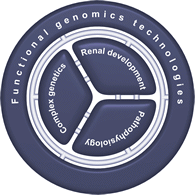
Research within EuReGene is subdivided in 4 Topics:
Functional genomics technologies (Topic 1)
Renal development (Topic 2)
Pathophysiology (Topic 3)
Complex genetics (Topic 4)
Research partners can be involved in more than one Topic. This possibility facilitates cooperation between groups and the exchange of scientific results among the partners.
All partners contribute data to the continuously growing kidney atlas which will eventually contain all the data acquired during the EuReGene project and which will be publicly available.
If you would like to read more about EuReGene, have a look at the Preview published in Organogenesis 2005.
.


Tony
Founder and chief visionary, Tony is the driving force behind the company. He loves to keep his hands full by participating in the development of the software, marketing, and customer experience strategies.

Mich
Mich loves taking on challenges. With his multi-year experience as Commercial Director in the software industry, Mich has helped the company to get where it is today. Mich is among the best minds.

Aline
Aline is one of the iconic people in life who can say they love what they do. She mentors 100+ in-house developers and looks after the community of thousands of developers.

Iris
Iris, with her international experience, helps us easily understand the numbers and improves them. She is determined to drive success and delivers her professional acumen to bring the company to the next level.
Beauty without
expression is boring
Join us and enjoy the pleasure of caring for yourself.